
Financing & Insurance · Greater Boston · March 2026
Fannie Mae Just Loosened Condo Rules—And Tightened Reserve Requirements
Here’s what LL-2026-03 actually changes for condo buyers, sellers, and the buildings themselves.
On March 18, 2026, Fannie Mae released Lender Letter LL-2026-03, updating condo project standards and property insurance requirements. The short version: it’s now easier for more condo projects to qualify for financing, but the projects themselves face higher bars for keeping their buildings insured and their reserves funded.
If you sell, buy, or list condos, here’s what you actually need to know.
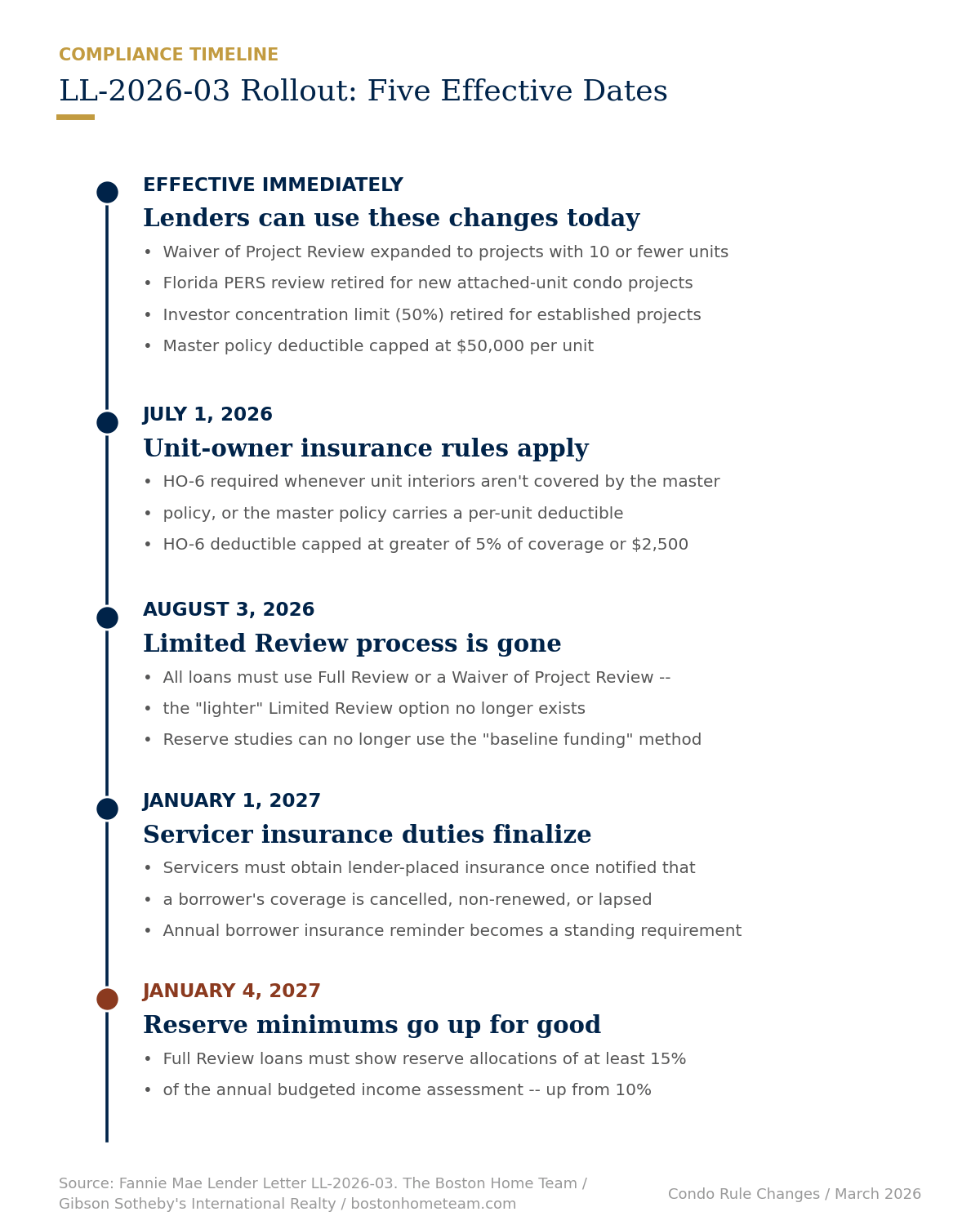
Most of these changes are effective immediately, though a few roll out on staggered timelines: deductible and unit-owner requirements (July 1, 2026), Limited Review retirement and enhanced reserve studies (Aug. 3, 2026), higher reserve minimums (Jan. 4, 2027), and servicer lender-placed insurance rules (Jan. 1, 2027).
Effective | What Changes |
|---|---|
Immediately | Waiver expansion, Florida PERS retirement, investor cap removal, $50K deductible cap |
July 1, 2026 | HO-6 requirement and individual deductible cap take effect |
Aug. 3, 2026 | Limited Review fully retired; baseline-funding reserve studies no longer allowed |
Jan. 1, 2027 | Servicer lender-placed insurance and annual reminder rules finalize |
Jan. 4, 2027 | 15% reserve allocation minimum takes effect on Full Review loans |
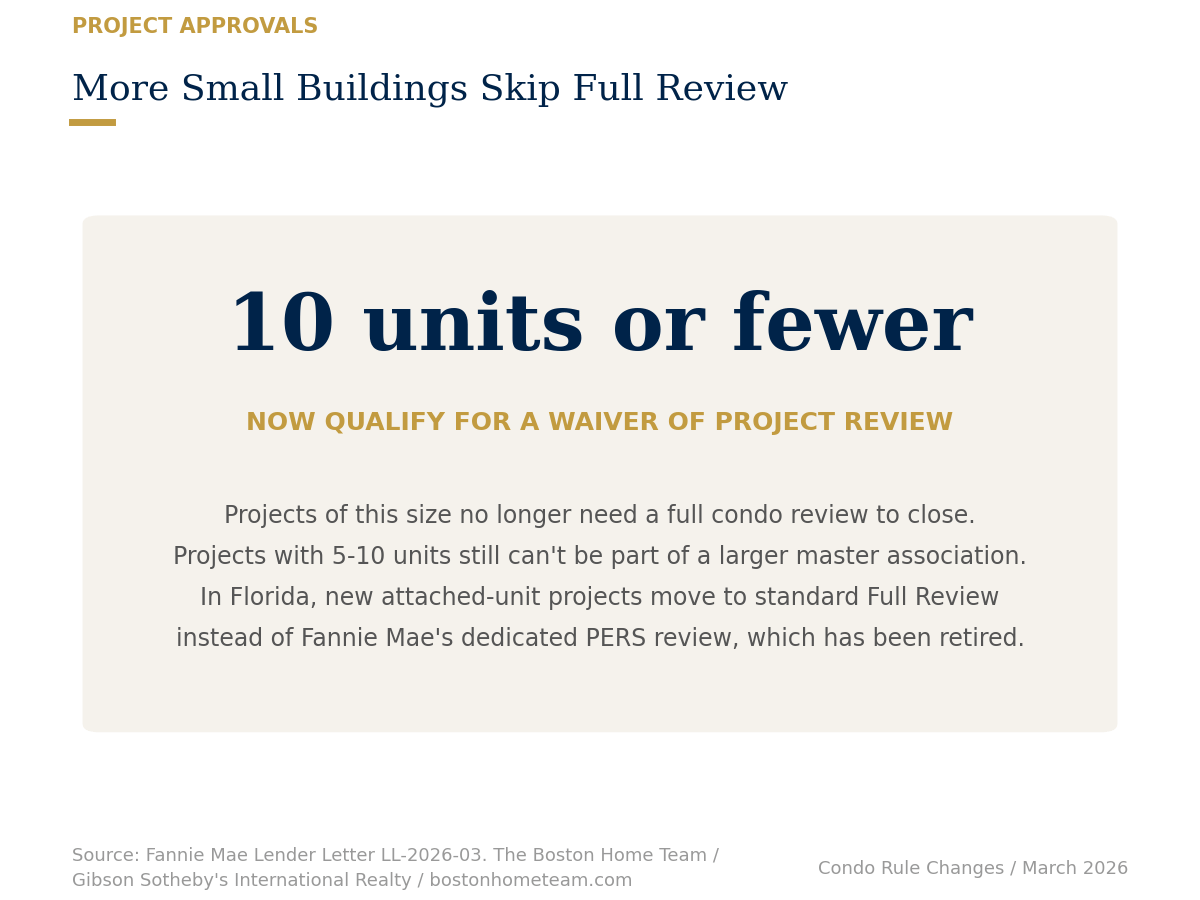
- Waiver of Project Review expanded to include projects with 10 or fewer units (5–10 unit projects can’t be part of a larger master association). Fewer projects will need a full condo review at all.
- Florida PERS review retired for new condo projects with attached units — these can now go through the standard lender-delegated Full Review instead of Fannie Mae’s dedicated review service.
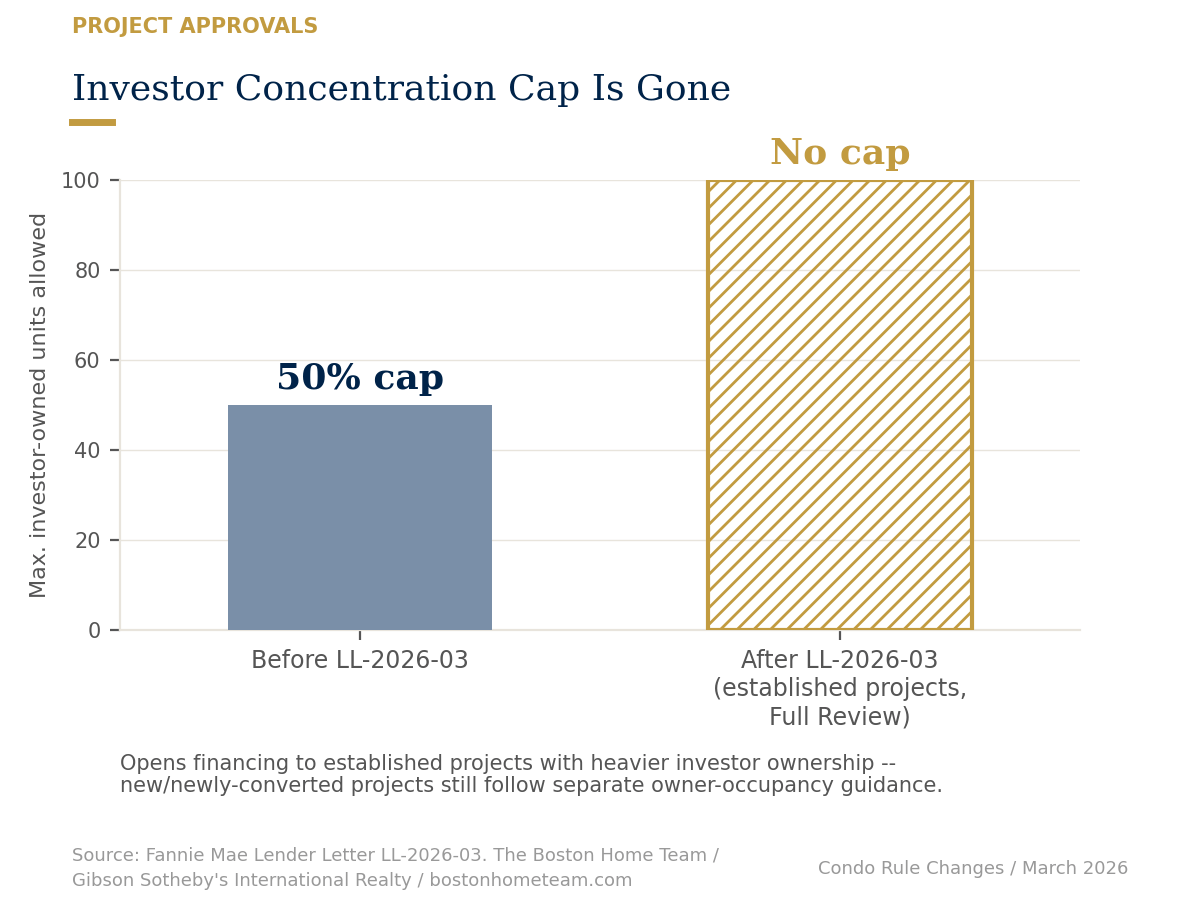
- Investor concentration limit (50%) retired for established projects under Full Review, opening the door for projects with heavier investor ownership.
- Limited Review process retired entirely (must be phased out by loans dated Aug. 3, 2026) — projects that used to qualify for the “lighter” review will now go through Full Review or a Waiver.
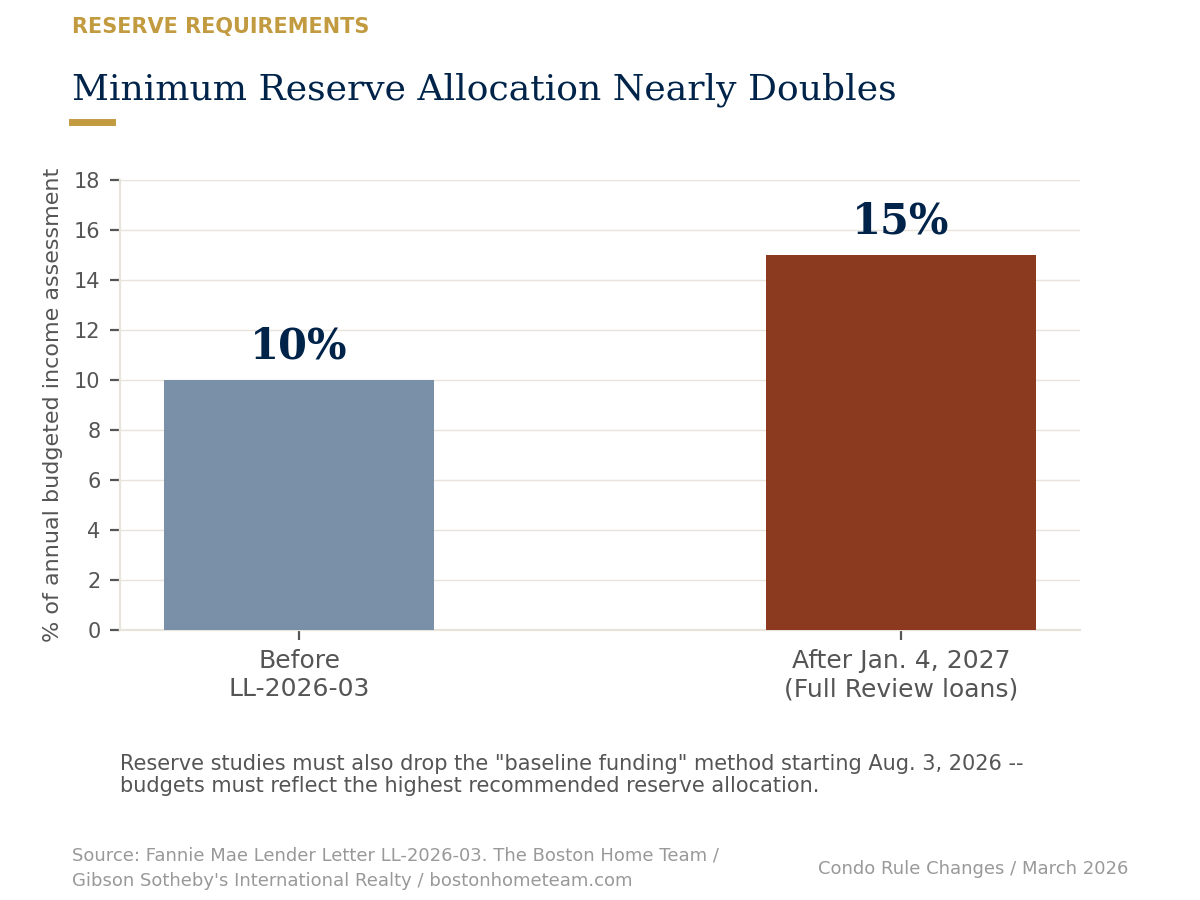
- Reserve allocation minimum jumps from 10% to 15% of the annual budgeted income assessment for capital expenditures and deferred maintenance (effective for Full Review loans dated on or after Jan. 4, 2027).
- Reserve studies get stricter — associations can no longer use the “baseline funding” method that lets reserves dip toward zero; budgets must reflect the highest recommended reserve allocation.
- Replacement cost documentation requirements are retired for 1–4 unit properties and simplified for project developments — insurers’ standard policy language is now sufficient, in most cases, without extra paperwork.
- Roofs no longer need replacement-cost coverage — they must still be insured, just not necessarily at full replacement value.
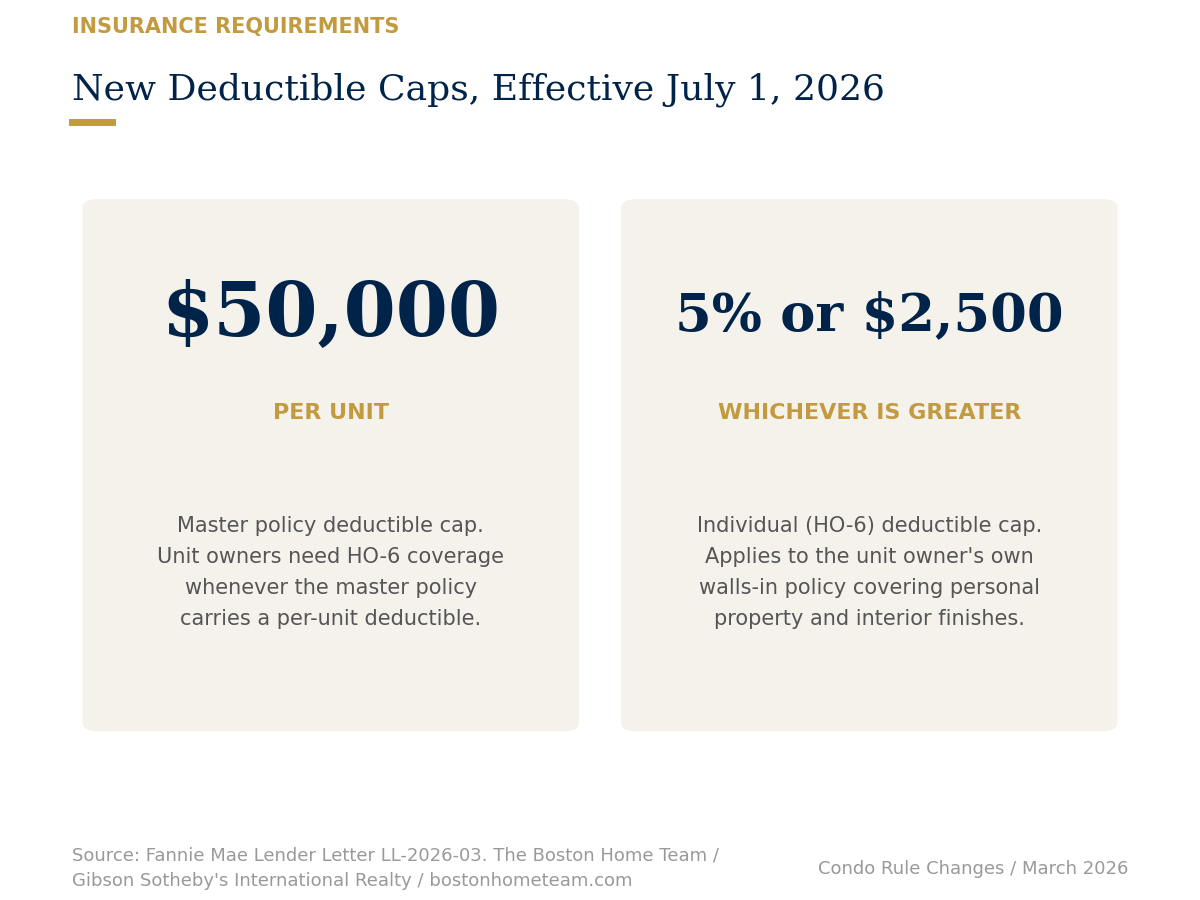
- Master policy deductibles capped at $50,000 per unit, with unit owners required to carry HO-6 (walls-in) coverage whenever the master policy has a per-unit deductible or doesn’t cover unit interiors.
- Individual (HO-6) deductible cap set at the greater of 5% of coverage or $2,500.
- Servicers must send an annual insurance reminder to borrowers going forward.
More condo buildings — especially smaller ones under 10 units — will suddenly be financeable that weren’t before, which can widen your buyer pool if you’re listing a condo in a small or investor-heavy building. That said, if your HOA hasn’t been funding reserves adequately, expect budget and dues conversations to intensify over the next year as the 15% minimum phases in. A well-documented, well-funded reserve study is about to become a bigger selling point than it used to be.
Financing approval on condos in smaller buildings, investor-heavy developments, and (in Florida) new construction should get faster and less restrictive. But don’t skip the insurance homework: ask whether the building’s master policy has a per-unit deductible — if it does, you’ll need your own HO-6 policy sized to cover that deductible, not just your belongings. Budget for that premium before you fall in love with a unit.
Buyers and sellers alike will have questions about why financing suddenly got easier on a building it was hard to finance six months ago, and why the HOA is suddenly raising dues. Get familiar with the reserve study and insurance disclosure documents for any condo project you list — being able to explain “this building qualifies for a Waiver of Project Review” or “here’s why the per-unit deductible matters for your HO-6 policy” will set you apart. Also flag the compliance dates to lenders and buyers early in a transaction — a loan application dated even a few weeks apart can fall under different rules.
About This Report
BJ Ray · The Boston Home Team
This report covers Fannie Mae’s condo financing, reserve, and insurance standards as they apply to condo buyers, sellers, and associations across Greater Boston’s coverage markets, drawn directly from Lender Letter LL-2026-03 (issued March 18, 2026). This report is part of an ongoing series tracking real estate conditions across Greater Boston coverage markets published each season by The Boston Home Team at Gibson Sotheby’s International Realty. BJ Ray has tracked Greater Boston real estate data across these markets for 21 years.
This summary is for general informational purposes and reflects Fannie Mae Lender Letter LL-2026-03 (March 18, 2026). Always confirm current requirements with your lender, as implementation timelines and details are subject to further updates.
Buying or selling a condo in Greater Boston? Let’s talk through what these changes mean for your building.