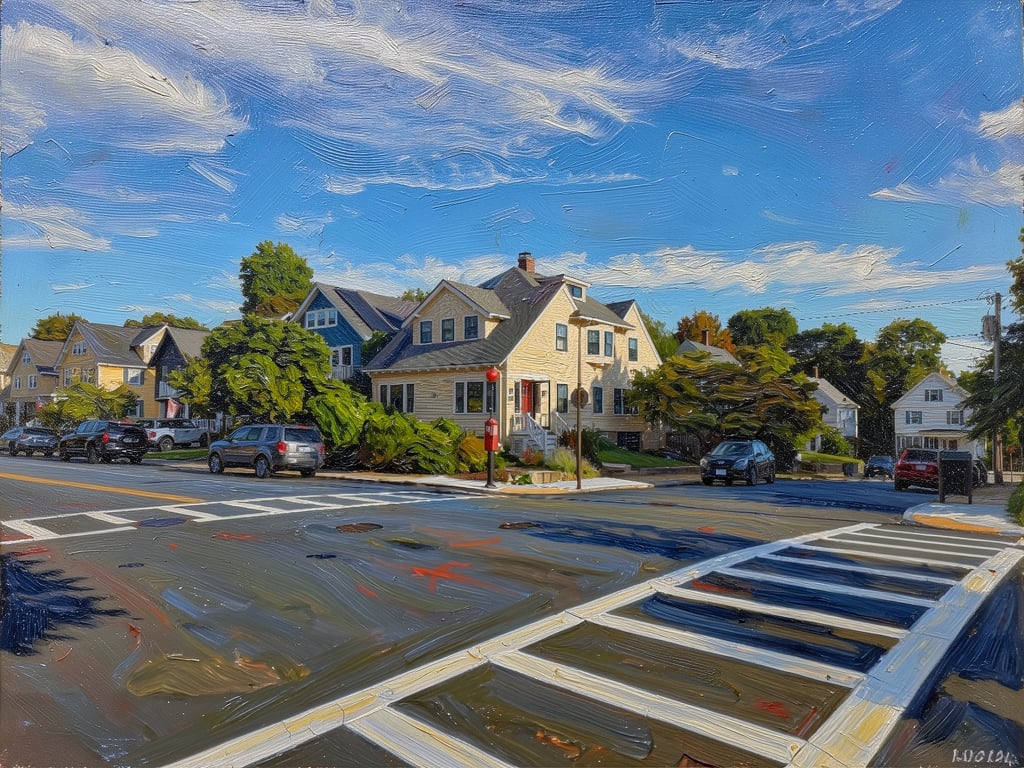
On a tree-lined cul-de-sac in Huron Village, a corporate bankruptcy lawyer named Cohn has been watching demolition crews clear the lot next to the house he's lived in since 2012. A developer wants to replace the single-family home at 9 Wyman Road with a six-story, 56-unit apartment building. Neighbors built a website called "Stop 9 Wyman," asked the Cambridge Historical Commission to landmark the property, and got turned down. Cohn told the Boston Globe he and his neighbors "absolutely will sue" if the project gets its building permit.
That fight is real, and it's the version of Cambridge's zoning story that travels fastest: one photo of a construction fence, one lawsuit threat, and a narrative that the city has thrown open the door to teardowns everywhere. If you're weighing a purchase in Cambridge right now, that story is mostly noise. The real story is quieter, more specific to certain lot types, and it has a deadline. The Cambridge City Council is scheduled to vote September 28 on amendments that would change how much of a lot a new building can occupy, and that vote lands ten days from now.
What the ordinance actually did
In February 2025, the City Council voted 8 to 1 to end single- and two-family-only zoning across Cambridge. Under the new Multifamily Housing Ordinance, four-story multifamily buildings are allowed by right in every residential district except open space, and six-story buildings are allowed on lots over 5,000 square feet if a share of the units are income-restricted. Before the vote, roughly a third of Cambridge's residential land legally permitted only one or two units per lot, regardless of what a developer or homeowner wanted to build there.
The goal was straightforward: let more housing types get built without a special permit fight every time. Eighteen months later, city officials say it's working. By July 2026, Cambridge had permitted around 400 new homes for the year, a meaningful share of them small and midsized multifamily projects that simply weren't legal before.
The gap between the rumor and the record
The loudest objection to the ordinance was a number: one councilor said in an email that 148 projects were in the pipeline, implying 148 or more houses slated for demolition. Councilor Marc McGovern went to the city's Inspectional Services Department to check. Here's what he found, and what a second widely repeated number looked like once someone traced it back to its source.
| Claim in circulation | What the city's own records showed |
|---|---|
| 148 projects "in the pipeline," implying 148+ demolitions | 22 full demolition permits issued as of May 28, 2026, several tied to 100 percent affordable projects unrelated to the multifamily ordinance |
| 312 Historical Commission inquiries, implying 312 historic homes at risk | 59 permits actually issued following those inquiries |
| Ordinance will produce only $2.5 to $3 million luxury units | Most planned projects are rental units, not for-sale luxury condos, and the ordinance is on track to generate roughly 70 subsidized, income-restricted units |
None of this means the concerns raised by Wyman Road's neighbors or by groups like the Cambridge Citywide Coalition are baseless. It means the scale of change is smaller and more targeted than the panic version suggests, and a buyer evaluating a specific property should look at that property's own zoning position rather than the citywide rumor mill.
What's actually moved in the market
The number that matters more for anyone shopping in Cambridge right now isn't demolition counts. It's what the ordinance has done to how different property types are priced against each other. In 2025, the median sale price for a Cambridge multifamily building climbed by roughly $400,000 to $2.165 million, with the average multifamily sale reaching $2.6 million, a shift a local brokerage's year-end market report tied directly to the new zoning allowing four-story buildings with modest setbacks on essentially any residential lot. Developers are buying two- and three-family buildings specifically to expand what can legally sit on that land.
At the same time, Assistant City Manager for Community Development staff have noted a related shift: fewer owners are converting existing two- and three-family buildings down into single-family homes, a pattern that had been common before the ordinance and that reduced the city's multifamily housing stock over time. If you've been house-hunting for a legal two- or three-family in Cambridge, that's a small piece of good news. Fewer of them are quietly disappearing into single-family conversions than before.
Cambridge's overall housing market stayed competitive through the summer. Over the three months ending July 2026, the median sale price citywide was $1.2 million, homes drew about 4 offers on average, and the typical listing sold in around 21 days. That's the backdrop the zoning fight is playing out against: a market where buyers are already competing hard, and where a zoning decision that changes what's buildable on a given lot changes what that lot is worth to whoever bids on it.
Ten days that could change the math
This is the part that matters if you're actively negotiating on a Cambridge property with any redevelopment potential. On September 16, a joint City Council committee hearing advanced proposed amendments to the ordinance. The changes wouldn't touch the four-story and six-story height limits. They would shrink how much of the lot a new building can occupy. Combined side setbacks would need to total at least 15 feet, up from 10, with a minimum of five feet on each side. Combined front and rear setbacks would need to total at least 25 feet, with at least five feet at either end.
On a standard Cambridge lot, that difference isn't cosmetic. It's the difference between a building footprint that supports six units and one that supports four, without adding height to make up the space. McGovern made the underlying trade-off explicit in an earlier council session, describing what the ordinance was designed to do:
"If you take a project where before multifamily housing, a developer would've built a single-family $3 million home, and after multifamily housing is building six townhouses at, say, $2 million, right? Those are still six units that are cheaper than what the alternative was before."
Shrink the buildable footprint and that math changes. A resident-led citizen petition, filed separately by Doug Brown and 13 other residents, goes further and asks for additional height and design restrictions, which under state law now has to move through the Ordinance Committee and Planning Board on its own track. Vice Mayor Burhan Azeem has pushed back on holding every project in the pipeline hostage to that petition while it works through review.
The full Council is expected to vote on the CDD-backed amendments September 28. Whatever passes will apply going forward. If you're under contract or negotiating on a property where the lot's development potential is part of the value, that's a date worth asking your agent and attorney about directly, since whether a specific project gets grandfathered under the current rules can depend on exactly when a permit application was filed.
What this means depending on what you're buying
- Buying a single-family home to live in: the demolition and mega-project stories you've read are concentrated on a small number of larger or corner lots, not the typical mid-block Cambridge property. Ask what's zoned and buildable on adjacent parcels, since that's a more useful question than "is Cambridge tearing down single-family homes."
- Buying a two- or three-family as an owner-occupant or small investor: fewer of these are being converted down into single-family homes than before the ordinance, which should mean somewhat steadier inventory in this category going forward, even as multifamily building prices overall have moved up.
- Buying with redevelopment potential in mind: the setback amendments moving through committee this month directly affect how much you can build on a given lot. Get a read on where a specific property sits relative to the 5,000-square-foot threshold that separates four-story from six-story eligibility, and don't assume the rules in place today will be the rules in place after September 28.
A few quick answers
Does this zoning change apply to Somerville, Brookline, or Newton too? No. The Multifamily Housing Ordinance is a Cambridge-specific policy. Other Greater Boston communities are having their own conversations about missing middle housing, but none has adopted anything at this scale.
Should I worry about a large building going up next door to a home I'm considering? It's worth checking, but the actual demolition and large-scale redevelopment activity has been concentrated in specific projects rather than spread evenly across the city. A property-specific zoning check tells you more than a citywide headline does.
Are Cambridge condo and single-family prices still climbing? Recent data shows a mixed picture. Citywide medians have moved in different directions across different three-month windows this year, which is typical in a market with relatively few monthly sales. Track trends over several months rather than a single snapshot before drawing conclusions about a specific segment.
Zoning fights like this one move fast, and the fine print in a committee vote can matter more to your bottom line than the headline next to it. If you're weighing a property in Cambridge, or comparing it against Somerville, Brookline, or another inner suburb, The Boston Home Team can help you read what a specific lot's zoning position actually means for its value. Request a free neighborhood market analysis before you write an offer, not after.