Looking for a Boston neighborhood that feels connected, practical, and genuinely local? Roslindale Village stands out because it offers something many buyers and residents want but do not always expect to find in the city: a real neighborhood center with daily conveniences, green space, and a strong sense of place. If you are trying to understand why Roslindale feels so distinct, this guide will walk you through the history, layout, housing, and everyday rhythms that give Roslindale Village its small-town-in-the-city feel. Let’s dive in.
Roslindale Village has a true center
One reason Roslindale Village feels different from many city neighborhoods is that it has a clear, readable center. The City of Boston describes Roslindale Village as a local shopping district centered around Adams Park, with Washington Street serving as the main thoroughfare. That kind of layout helps daily life feel organized around a neighborhood hub instead of a long commercial corridor.
Boston Planning also notes that Roslindale Village is the original Main Street district. That matters because it reinforces the idea of a place built around local businesses, civic life, and walkable routines. When you spend time in the village, you can feel that neighborhood-scale pattern at work.
The square is compact and active
Roslindale Square is about 6 miles south of Downtown Boston, but it does not feel cut off from the city. Boston Planning describes it as a compact commercial area with many historic buildings, local restaurants, shops, and civic spaces. That mix makes the center feel active without feeling overwhelming.
In practical terms, you can picture a place where errands, coffee, dining, and community spaces sit close together. That is often what people mean when they say a neighborhood feels like a small town. You can move through daily life without everything feeling spread out.
History shaped the neighborhood feel
Roslindale did not become this way by accident. Boston Planning says the neighborhood was primarily agricultural until the mid-19th century, then opened to residential growth through the railroad and streetcar, with major development booms in the 1890s and again later in the 20th century. That history helps explain why Roslindale developed as a residential neighborhood with a defined village core.
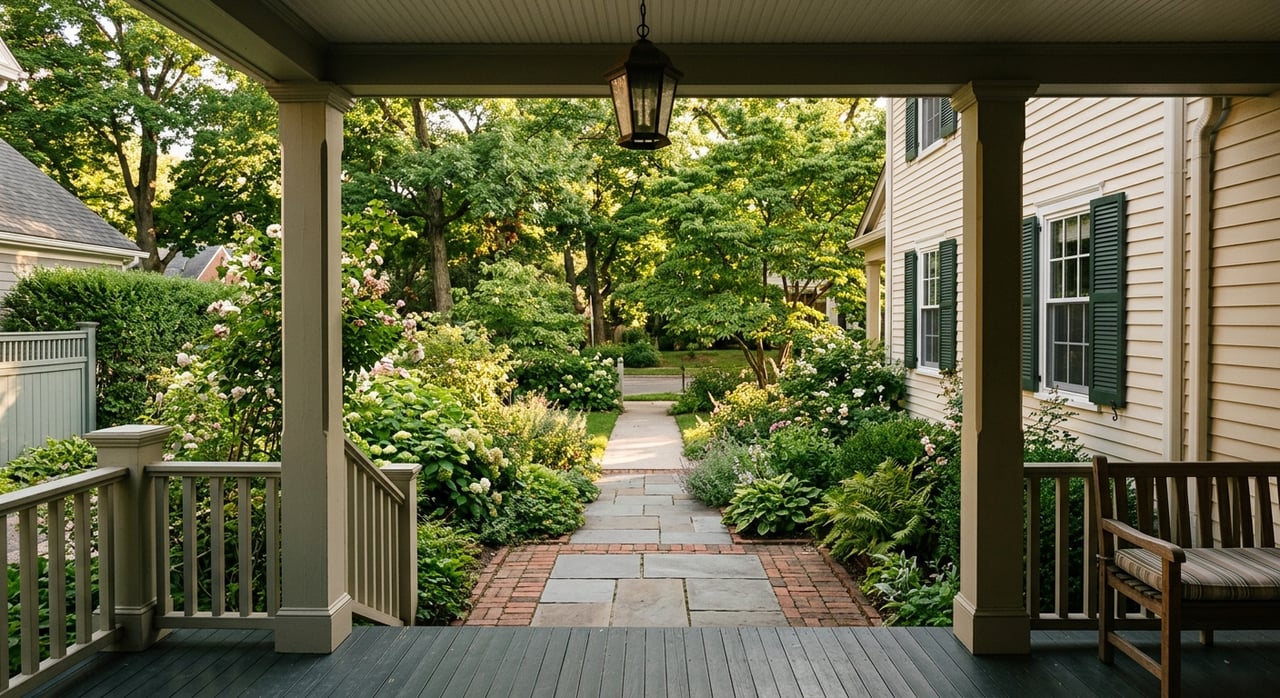
Boston.gov also describes Roslindale with the older phrase “garden suburb.” While that is a historic label, it still helps capture the neighborhood’s tree-lined and residential feel. Even today, Roslindale reads as a place where homes and local businesses fit together at a human scale.
It is home to Boston's longest running Farmer's market and its town center feel definitely creates a geographic focus where there are many community events in the park and in many of the surrounding businesses.
Residential streets support the village
A small-town feel often starts with what surrounds the main commercial area. In Roslindale, the village center sits within a primarily residential neighborhood rather than a landscape dominated by large office buildings or towers. That helps the commercial district feel woven into everyday life.
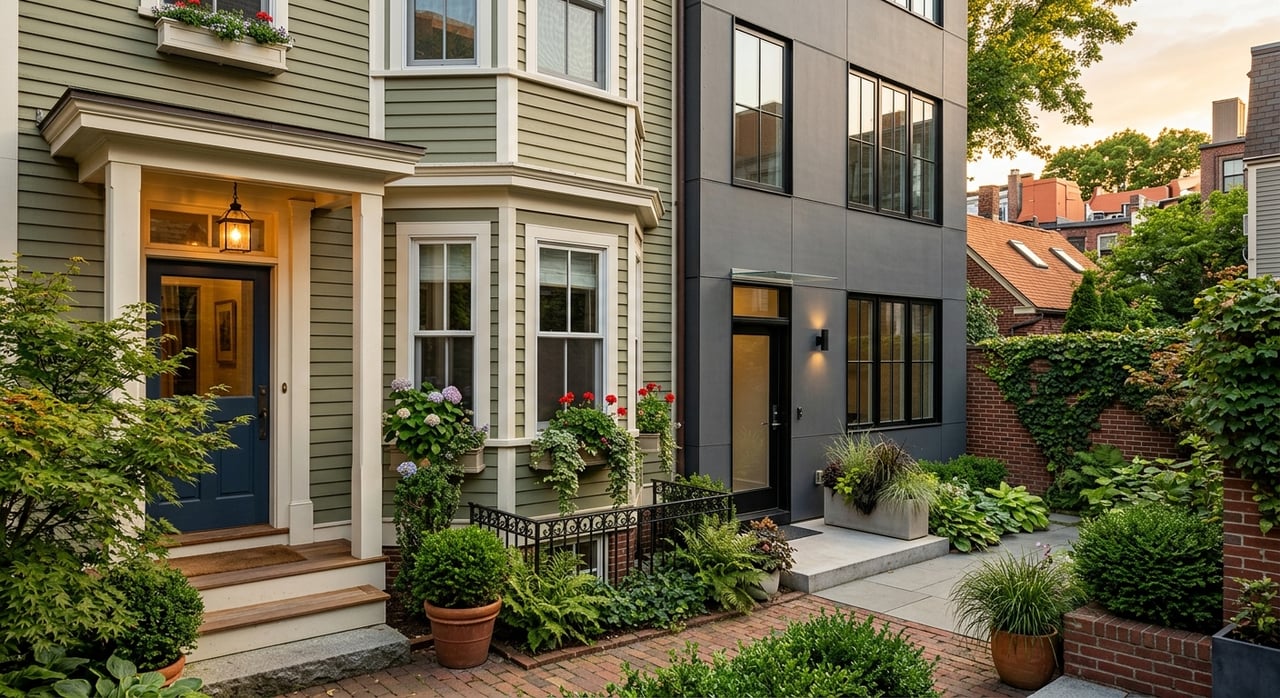
Boston Planning identifies a mix of single-family homes, Boston triple-deckers, and small apartment buildings across the neighborhood. Boston.gov also notes that many colonial homes have been converted into condos. That range of housing types supports a neighborhood where different kinds of households can live near the center.
Local businesses anchor daily life
Roslindale Village feels local because daily routines can happen close to home. Roslindale Village Main Street says its business directory is designed to support independent neighborhood businesses, including dining, services, salons, fitness, and community resources. That broad mix helps make the center useful, not just charming.
For many people, that is the real test of a neighborhood hub. Can you grab a meal, run an errand, fit in a class, or take care of a practical task without leaving the area? In Roslindale Village, the answer is often yes.
The mix goes beyond restaurants
Independent business districts work best when they support more than one type of need. Roslindale Village Main Street lists examples such as 753 South, Akasha Yoga, and Adore Salon. Together, those examples show a center that combines dining, wellness, and services in one compact area.
That variety adds to the small-town atmosphere because it makes familiar routines possible. Instead of making separate trips across the city, you can often stay within the village for several parts of your day. That kind of convenience tends to build stronger neighborhood patterns over time.
Adams Park brings people together
Many neighborhoods have shops. Fewer have a civic heart that regularly draws people together. In Roslindale Village, Adams Park plays that role.
Boston Planning describes Adams Park as a 0.7-acre public park in the center of the square and an anchor for events, including the annual Roslindale Farmers Market. When a central public space hosts repeated community activity, it helps a neighborhood feel familiar and connected. This is where the weekly Roslindale Farmer's Market happens every Saturday between June and the end of October. It's also where there are festivals, tree lightings, holiday gatherings throughout the year.
The farmers market is part of the rhythm
The Roslindale Village Main Street Farmers Market is one of the clearest examples of the neighborhood’s community life. For 2026, the summer market runs from June 6 through November 21 on Saturdays from 9:00 a.m. to 1:30 p.m. at Adams Park. The organization describes it as a community staple.
The market also serves as a food-access point that accepts SNAP/EBT and farmers market coupons. Roslindale Village Main Street says it includes wellness activities, live performances, children’s activities, and a community stall program. That combination turns a weekly shopping trip into a broader neighborhood gathering.
The winter market generally runs from early January through March. That matters because it suggests this is not just a one-season event. It is part of an ongoing local rhythm that keeps the village active across much of the year.
Civic spaces add to the village identity
A small-town feel is not only about commerce. It is also about places that support civic and cultural life. Boston Planning notes that Roslindale Square includes civic spaces such as the Roslindale Branch of the Boston Public Library and The Substation.
Those kinds of spaces make the center feel more complete. They give the village public places where people can gather, participate, and spend time for reasons beyond shopping. That is often a big part of what makes a neighborhood feel rooted.
Green space expands the experience
Roslindale Village may feel compact, but it is not limited to the square itself. Boston Parks and Recreation lists several open spaces in Roslindale, including Adams Park, Arnold Arboretum, Fallon Field, and Healy Playground. That gives residents access to both neighborhood-scale outdoor spaces and larger landscapes nearby.
Boston.gov describes the Arnold Arboretum as a 265-acre park in the Emerald Necklace. That is a major asset because it adds a large-scale green space experience to everyday neighborhood life. You get a compact village center and meaningful access to open space in the same part of the city.
Why that matters for daily living
When people describe a neighborhood as feeling easy to live in, green space is often part of the reason. It gives you room to walk, spend time outdoors, and break up the pace of urban life. In Roslindale, those options sit alongside the village center rather than far away from it.
That balance helps explain the neighborhood’s appeal. Roslindale feels residential and grounded, but it also gives you access to public spaces that broaden your day-to-day experience.
Transit keeps the city within reach
Part of Roslindale Village’s appeal is that it feels local without feeling isolated. Boston.gov says downtown is a quick ride away on the MBTA Orange Line and commuter rail. Boston Planning adds that Roslindale has been served by the Needham Line since 1987 and that Roslindale Village station links the area directly to Downtown.
The Roslindale Square planning page also notes service from Roslindale Village station and several MBTA bus routes. For buyers and residents, that transit access is a big part of what makes the neighborhood practical. You can enjoy a local, village-style environment while staying connected to the rest of Boston.
A neighborhood that supports both routine and mobility
This balance is one of Roslindale’s strongest qualities. Some places feel convenient but impersonal. Others feel charming but harder to navigate on a daily basis. Roslindale Village stands out because it offers both neighborhood character and useful connections.
That can be especially appealing if you want a home base that supports daily routines close to home but still keeps commuting and city access realistic. The result is a neighborhood that feels grounded, not disconnected.
Housing helps explain the vibe
Housing shape influences neighborhood identity more than many people realize. In Roslindale, the mix of single-family homes, triple-deckers, small apartment buildings, and condo conversions helps create a layered residential environment. That variety supports activity near the center while preserving the broader neighborhood’s residential character.
Boston Planning says Roslindale is still primarily residential. It also reports that 65% of households are families and 19% of the population is enrolled in PreK-12. Those numbers help explain why the neighborhood often feels lived-in, established, and locally rooted.
What that can mean for buyers
If you are exploring Roslindale, the housing mix gives you different ways to plug into the neighborhood. Depending on the property type and location, you may find options closer to shops and transit or on quieter residential streets farther from the center. That flexibility is part of what gives Roslindale broad appeal.
City planning for Roslindale Square also emphasizes more housing near active ground-floor businesses and community spaces. That reinforces the neighborhood-center model and suggests ongoing support for a village-style pattern of living.
Why Roslindale Village feels like a small town
When you put it all together, the small-town feeling starts to make sense. Roslindale Village has a compact center, historic buildings, independent businesses, a central park, a farmers market, civic spaces, nearby green space, and usable transit. Those elements overlap in a way that makes the neighborhood feel both personal and practical.
It is not a suburb, and it is not trying to be. It is a Boston neighborhood with a distinct village identity, shaped by history and supported by the way people live there now. If you are looking for a place where neighborhood life feels visible and daily routines feel grounded, Roslindale Village offers a compelling example.
If you are thinking about buying or selling in Roslindale, working with a team that knows how to connect home value with neighborhood character can make a real difference. The Boston Home Team brings local insight, thoughtful strategy, and hands-on guidance to every step of the process.
FAQs
Why does Roslindale Village feel different from other Boston neighborhoods?
- Roslindale Village has a compact center around Adams Park and Washington Street, with local businesses, civic spaces, and transit all close together, which gives it a more neighborhood-scaled feel.
What is at the center of Roslindale Village?
- The center of Roslindale Village is the local shopping district around Adams Park and Washington Street, with Roslindale Square serving as the neighborhood hub.
What kinds of homes are common in Roslindale?
- Boston Planning identifies single-family homes, triple-deckers, and small apartment buildings as common housing types, and Boston.gov notes that many older colonial homes have been converted into condos.
Does Roslindale Village have public transit access?
- Yes. Boston Planning says Roslindale Village station links the neighborhood directly to Downtown on the Needham Line, and the square is also served by several MBTA bus routes.
What makes Adams Park important in Roslindale Village?
- Adams Park is a central public space in the square and serves as an event anchor, including for the Roslindale Farmers Market.
Is there green space near Roslindale Village?
- Yes. Roslindale includes open spaces such as Adams Park, Fallon Field, Healy Playground, and the Arnold Arboretum, which Boston.gov describes as a 265-acre park in the Emerald Necklace.