Debating a classic pre-war brownstone or a mid-century condo in Brookline? You are not alone. The era of construction can shape everything from your layout and noise level to your energy bills and future condo fees. In this guide, you will learn how pre-war and post-war condos in Brookline compare, what to watch for in building systems and reserves, and how to choose the right fit for your lifestyle and budget. Let’s dive in.
What pre-war and post-war mean in Brookline
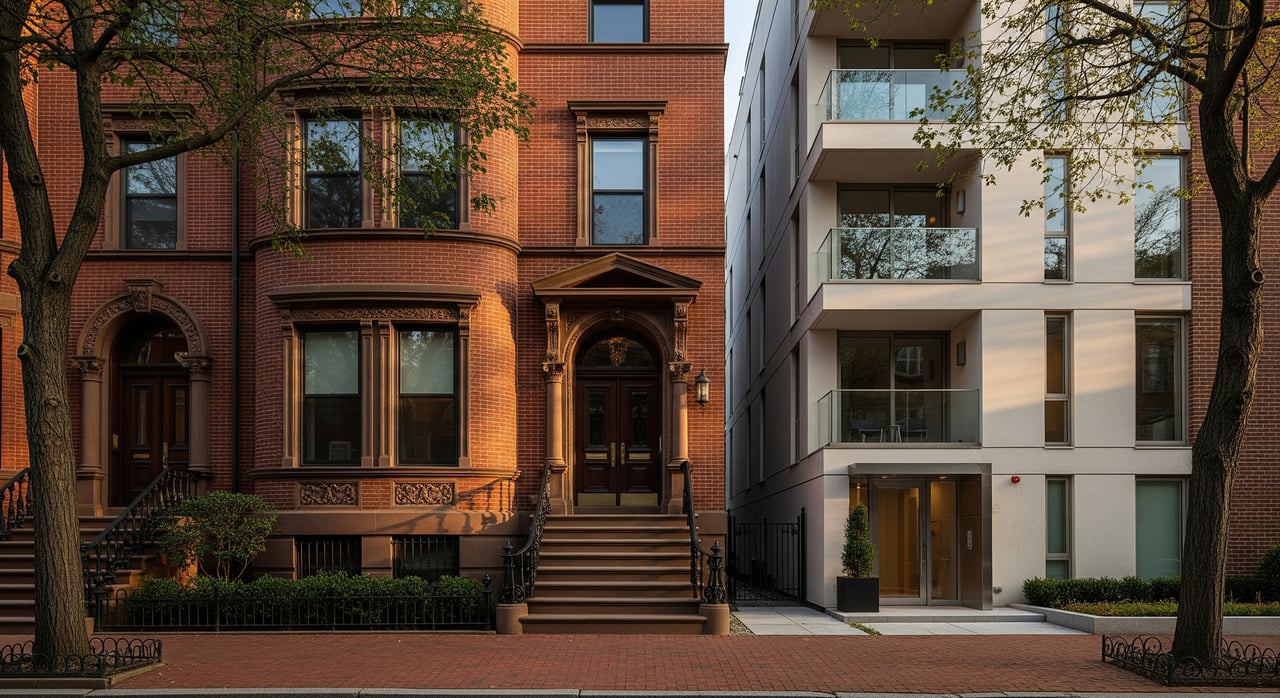
Pre-war in Brookline usually means buildings built before World War II, from late 19th century through the 1930s. You will see Victorian rowhouses, brownstones, triple-deckers, and early apartment buildings with masonry facades and wood-framed interiors. Many started as rentals and were converted to condos later, so finishes can vary by unit.
Post-war refers to buildings constructed after World War II, mainly the late 1940s through the 1970s. In Brookline and nearby Boston neighborhoods, these include mid-century masonry or concrete apartment blocks, garden-style complexes, and mid-rise buildings from the 1960s and 1970s. These properties often have more standardized floor systems, elevators, and larger common areas.
Brookline has a large share of older housing compared with many suburbs. Historic districts are common, which matters because exterior changes like window replacements may need review. Codes and permitting also differ by building type and scope of work, so renovation planning benefits from early due diligence.
How layouts and feel compare
Pre-war condos often deliver tall ceilings, thicker walls, and architectural details. You may find 9 to 12 foot ceiling heights, larger room sizes, formal living and dining rooms, tall windows, and period trim or fireplaces. Circulation is often through smaller lobbies or stairwells, and many buildings are walk-ups or have a small elevator.
Post-war condos tend to feel more efficient and straightforward. Expect 8 to 9 foot ceilings, compact kitchens and baths, and central corridors. Later post-war buildings sometimes offer more open living and dining areas. Amenities like elevators, on-site laundry, storage, bicycle rooms, and landscaped grounds are more common.
Construction and systems
Understanding how these buildings are built helps you anticipate comfort, maintenance, and future costs.
Heating and ventilation
Pre-war buildings frequently rely on centralized steam or hot-water boilers with radiators or baseboards. Unit-level temperature control can be limited unless the system has been modernized. Adding individual controls or in-unit heat pumps is a common upgrade during renovations.
Post-war buildings often have centralized boilers too, although some adopted forced-air systems. Mechanical rooms tend to be larger, which can make replacements more straightforward in terms of access, though still a significant capital expense for associations. Ventilation in older buildings often depends on operable windows. Modern expectations may call for additional ventilation, such as bath and kitchen exhaust or heat-recovery systems.
Electrical and plumbing
Pre-war electrical systems were not designed for today’s loads. Many buildings have been upgraded, yet you may still find older service capacity, dated panels, or legacy wiring. Kitchen renovations and new HVAC often require panel and circuit upgrades.
Plumbing in pre-war buildings can include galvanized steel supply lines and cast-iron drain stacks. Replacing vertical stacks is disruptive and costly, which is important to factor into reserves and planning. Post-war buildings more often have copper supply lines and cast-iron or early PVC drains, but age-related joint failures can still occur.
Energy efficiency and windows
Pre-war masonry walls provide thermal mass but usually lack cavity insulation. Single-pane windows and air leakage at window and roof junctions are common. Retrofitting often involves air sealing, roof insulation, and window upgrades or storms.
Post-war buildings may have some insulation in walls or attics, but standards varied by decade. Many have single-pane glazing and thermal bridging at concrete slabs. Typical improvements include higher efficiency boilers, variable-speed pumps and controls, better air sealing, and window or door replacement. Programs like Mass Save can offer assessments, rebates, and financing for heating upgrades, insulation, and heat pumps in Massachusetts.
Noise, sound, and daily comfort
Sound behaves differently in wood-framed and concrete buildings. Pre-war wood floor assemblies can transmit footfall and airborne noise between floors. Thick masonry exterior walls can help block street noise, but interior floor and wall assemblies vary, especially after decades of renovations.
Concrete slabs in many post-war buildings reduce floor-to-floor impact noise compared with wood framing. You may still hear mechanical noise from boilers, pumps, or elevators if your unit sits near those areas. Upgrades like resilient flooring, acoustic underlayment, sound-rated drywall, and window improvements can help in both eras.
Maintenance, fees, and reserves
Condo fees and reserves depend on a building’s systems, age, recent upgrades, and amenities. In pre-war buildings, common capital projects include roof replacement, boiler modernization, window replacement, repointing masonry, and plumbing stack replacements. These items can drive fees or special assessments if reserves are low.
Post-war buildings may have more predictable infrastructure but different cost drivers. Expect eventual boiler replacement, elevator modernization, façade repairs, and waterproofing or garage work in buildings with structured parking. Large amenity footprints like garages, pools, and landscaped grounds can increase operating costs even if systems are newer.
Best practice is a periodic reserve study by a qualified professional to estimate useful life and replacement costs for major components. Massachusetts condominium law sets the governance framework, and associations typically adopt budgets and plan funding levels based on reserve study guidance.
Renovation rules and financing
If a property sits in a historic district in Brookline, exterior work like windows, cornices, or porches often requires review. This can add time and cost, so it is smart to check status early. Significant structural, plumbing, electrical, or fuel tank work requires permits and inspections under state and local codes.
Lenders will look at building health too. You may be asked for recent budgets, master insurance details, reserve levels, and any special assessments. For some buyers, FHA or VA project approvals can matter, so plan ahead if you use government-backed financing.
How to choose the right fit
If you value character and volume, pre-war homes can feel special. You get height, details, and the solid feel of older masonry, with the tradeoff of older systems that may need attention. Energy retrofits and sound control may be part of your long-term plan unless prior owners invested in upgrades.
If you want straightforward systems and larger common-area conveniences, post-war buildings can deliver. You may find quieter concrete floors and elevators, yet you still need to budget for major projects like elevators, façade work, and garage waterproofing. Amenities can add lifestyle value, along with higher operating costs in some complexes.
Quick buyer checklist
Use this list to compare pre-war and post-war options side by side:
- Year built, plus a summary of major renovations and dates.
- Construction type: masonry with wood frame, concrete slab, or steel framing.
- Heating plant age and fuel type, plus whether heat and hot water are included in fees.
- Cooling: central AC presence or the feasibility of installing heat pumps or mini-splits.
- Electrical service capacity and panel age, especially if you plan a new kitchen or in-unit laundry.
- Plumbing stack and supply line history, including any repiping.
- Reserve study date, current reserve balance, and history of special assessments.
- Next 5 to 10 years of anticipated capital projects and estimated per-unit cost.
- Historic district status and exterior work rules, especially for windows and façades.
- Noise sources: proximity to elevators, mechanical rooms, garages, or busy streets.
- Water and moisture indicators: basement condition, repointing needs, or signs of infiltration.
- Permit history for prior unit renovations and whether work was done to code.
- Amenities and associated operating costs: parking, concierge, pool, or landscaped grounds.
Work with a local team
Choosing between pre-war and post-war is about more than style. It is about systems, reserves, noise, and long-term fit. If you want a calm, data-informed process that balances design and due diligence, our team can help you compare buildings, review documents, and plan smart offers in Brookline and nearby Boston neighborhoods. Ready to explore your options with a neighborhood-rooted team backed by premium marketing reach? Connect with The Boston Home Team to get tailored guidance and request a free neighborhood market analysis.
FAQs
What does “pre-war” mean for Brookline condos?
- Pre-war typically refers to buildings constructed before World War II, often with masonry exteriors, wood-framed interiors, tall ceilings, and formal room layouts.
Are post-war Brookline condos usually quieter between floors?
- Many post-war buildings use concrete slabs that reduce floor-to-floor impact noise compared with wood-framed assemblies, though mechanical noise can still be a factor.
How do condo fees differ between pre-war and post-war buildings?
- Fees reflect each building’s systems and amenities; older buildings may face boiler, window, and masonry projects, while post-war buildings may budget for elevators, façades, and garages.
What energy upgrades should I look for in older condos?
- Useful upgrades include air sealing, roof insulation, efficient boilers or heat pumps, modern controls, and window improvements, sometimes supported by state energy programs.
What should I review before making an offer on a condo?
- Ask for the reserve study, recent budgets, master insurance details, capital project history and plans, permit records, and any historic district requirements for exterior work.